 admin 一月 21, 2024
介紹:
In recent years, the landscape of the global workforce has undergone a significant transformation, with an increasing number of companies adopting remote work policies. While this shift offers numerous benefits, such as access to a wider talent pool and increased flexibility, it also brings about its fair share of challenges. One prominent concern that companies face is the need for regular employee requalification to ensure skill currency and alignment with organizational goals. 在這篇文章中, we will explore the risks associated with remote work, the importance of ongoing employee assessment, and how an umbrella company can play a pivotal role in mitigating these challenges.
The Rise of Remote Work:
科技的出現為遠距工作革命鋪平了道路, 允許員工在家中或任何有網路連線的地方為其組織做出貢獻. 然而, 這種勞動力的去中心化為公司帶來了新的挑戰, 尤其是關於技能的持續發展以及員工與不斷演變的組織環境的匹配.
遠距工作與技能過時的風險:
公司面臨遠距工作的主要風險之一是技能可能過時. 快速的技術進步和行業變化需要員工保持對最新趨勢和工具的更新. 遠距工作者, 通常與辦公室的日常動態隔離, may find it challenging to keep pace with these changes, putting themselves and their employers at risk.
Employee Requalification as a Necessity:
To address the risks associated with remote work, organizations must prioritize employee requalification – a process that ensures employees possess the relevant skills needed for their roles. Regular assessments help identify gaps in knowledge and provide opportunities for training and upskilling.
Challenges in Implementing Employee Requalification for Remote Workers:
Implementing a robust employee requalification program for remote workers comes with its own set of challenges. Traditional methods may be impractical, given the dispersed nature of the workforce. Monitoring and evaluating remote employees’ performance and skill development can be a complex task, making it essential for companies to explore innovative solutions.
The Role of Umbrella Companies:
Enter the concept of umbrella companies, a solution designed to streamline the challenges associated with remote work and employee requalification. An umbrella company acts as a central entity that manages administrative tasks, including payroll, benefits, and employee assessments, for remote workers.
Mitigating Risks Through Umbrella Companies:
- Centralized Assessment and Training:
Umbrella companies facilitate centralized employee assessments, allowing organizations to standardize evaluation processes. This ensures that all remote workers undergo regular requalification assessments to identify and address skill gaps. - Customized Training Programs:
Based on assessment results, umbrella companies can offer tailored training programs to remote workers. 這種個人化的方法增強了技能發展,並確保員工在各自的領域保持熟練程度. - 接觸專家網絡:
傘型公司通常擁有產業專家和培訓師的網絡. 這使遠端工作者能夠利用知識資源,並接受專業人士的指導, 克服遠端工作可能帶來的孤立感. - 定期報告與分析:
透過中央化系統的運作, 傘型公司向雇主提供定期報告與分析, 讓他們了解遠端員工的技能與表現. 這種透明度對於就人力發展做出明智決策至關重要.
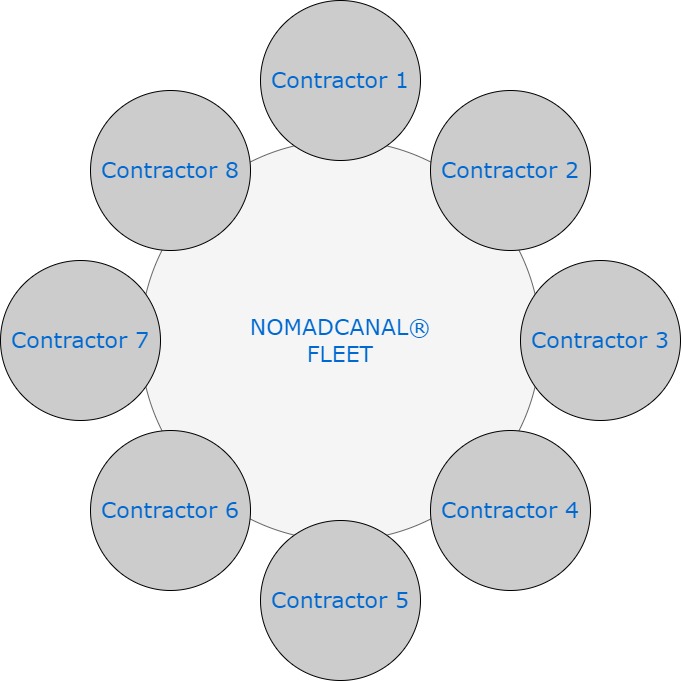
我們的解決方案: NOMADCANAL® FLEET
結論:
儘管遠端工作的興起帶來諸多優勢, 它也帶來了企業必須有效應對的挑戰. 員工再培訓被視為減輕遠程工作相關風險的關鍵方面. 利用控股公司(umbrella company)的服務在簡化評估和培訓流程方面可以發揮重要作用, 確保遠程員工保持技能水平, 投入度高, 並與組織目標保持一致. 隨著企業持續適應不斷變化的工作環境, 像這樣的主動措施將對於在遠程工作時代取得持續成功至關重要.