
導入:
近年, 世界の労働力の状況は大きな変化を遂げている, with an increasing number of companies adopting remote work policies. While this shift offers numerous benefits, such as access to a wider talent pool and increased flexibility, it also brings about its fair share of challenges. One prominent concern that companies face is the need for regular employee requalification to ensure skill currency and alignment with organizational goals. In this article, we will explore the risks associated with remote work, the importance of ongoing employee assessment, and how an umbrella company can play a pivotal role in mitigating these challenges.
The Rise of Remote Work:
技術の到来はリモートワーク革命への道を切り開きました, 従業員が自宅やインターネット接続のある任意の場所から組織に貢献できるようにしました. しかし, この労働力の分散化は企業に新たな課題をもたらしました, 特にスキルの継続的な開発や従業員と急速に進化する組織環境との整合性に関してです.
リモートワークとスキル陳腐化のリスク:
企業がリモートワークで直面する主要なリスクの一つは、スキルの陳腐化の可能性です. 急速な技術進歩や業界の変化により、従業員は最新のトレンドやツールに精通する必要があります. リモートワーカーは, しばしばオフィスの日常的なダイナミクスから孤立しています, may find it challenging to keep pace with these changes, putting themselves and their employers at risk.
Employee Requalification as a Necessity:
To address the risks associated with remote work, organizations must prioritize employee requalification – a process that ensures employees possess the relevant skills needed for their roles. Regular assessments help identify gaps in knowledge and provide opportunities for training and upskilling.
Challenges in Implementing Employee Requalification for Remote Workers:
Implementing a robust employee requalification program for remote workers comes with its own set of challenges. Traditional methods may be impractical, given the dispersed nature of the workforce. Monitoring and evaluating remote employees’ performance and skill development can be a complex task, making it essential for companies to explore innovative solutions.
The Role of Umbrella Companies:
Enter the concept of umbrella companies, a solution designed to streamline the challenges associated with remote work and employee requalification. An umbrella company acts as a central entity that manages administrative tasks, including payroll, benefits, and employee assessments, for remote workers.
Mitigating Risks Through Umbrella Companies:
- Centralized Assessment and Training:
Umbrella companies facilitate centralized employee assessments, allowing organizations to standardize evaluation processes. This ensures that all remote workers undergo regular requalification assessments to identify and address skill gaps. - Customized Training Programs:
Based on assessment results, umbrella companies can offer tailored training programs to remote workers. This personalized approach enhances skill development and ensures that employees remain adept in their respective domains. - Access to a Network of Experts:
Umbrella companies often have a network of industry experts and trainers. This allows remote workers to tap into a pool of knowledge and receive guidance from professionals, overcoming the isolation that can come with working remotely. - Regular Reporting and Analytics:
With centralized systems in place, umbrella companies provide regular reports and analytics to employers, giving them insights into the skills and performance of their remote workforce. This transparency is crucial for making informed decisions regarding workforce development.
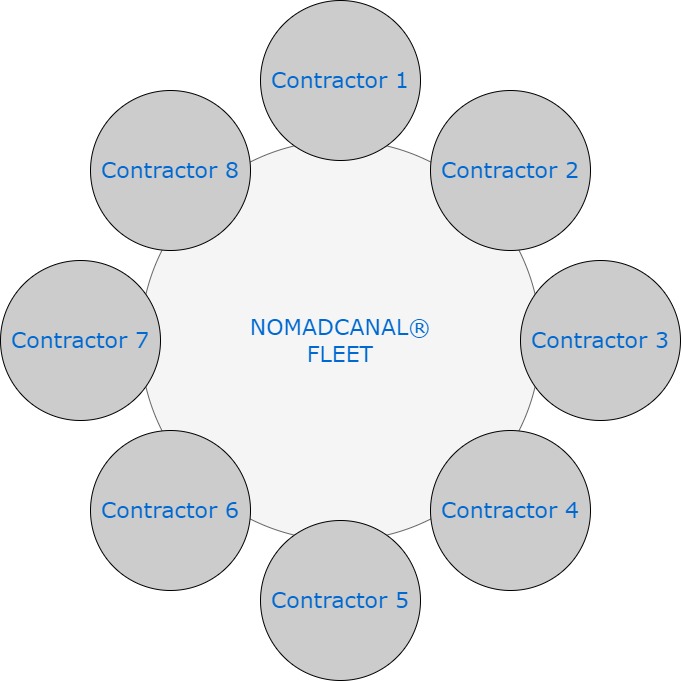
Our solution: NOMADCANAL® FLEET
Conclusion:
While the rise of remote work brings numerous advantages, それは企業が効果的に対処しなければならない課題も提示します. 従業員の再資格取得は、リモートワークに関連するリスクを軽減する上で重要な側面として際立っています. アンブレラ会社のサービスを利用することは、評価と研修のプロセスを合理化する上で非常に有効です, リモートワーカーが熟練し続けることを保証し, 積極的に関与し, 組織の目標に沿った状態を維持すること. 企業が変化する労働環境に適応し続ける中で, このような先手を打った措置は、リモートワーク時代における持続的な成功のために不可欠となるでしょう.